
Put the missing biology back and a tight, tired soil opens up: roots go down, rain goes in, and the nutrients it was holding come out. Here is what we have seen on British farms, and how it works.
Three seasons in, the same things happen every time: the roots go deeper, the topsoil gets thicker, the nutrients the soil was holding come free, and the humus builds. Here they are, measured.
Heavy Warwickshire clay, three seasons
Through three horizons with no compaction, where the untreated side stops at a pan.
Dorset loam, same field, same season
No hard layer on the treated side where the untreated trench was compact.
Dorset loam, same field
Twice the depth of open, aerated topsoil, and 45 cm in another field on the farm.
Heavy clay, the farm’s own tests
On both treated fields, with no potash bought: unlocked from the soil’s own reserve.
Heavy clay, two and a half years
A quarter more humus in the topsoil, which is where the water and the nutrients are held.
Warwickshire leys, an independent count
Two to three times the count a spade pit on the treated leys, against the farm’s own pasture.
Profile pits on Warwickshire clay and Dorset loam, April 2025, read at the pit face with the farmers present. A beef farm’s own laboratory tests, two and a half years apart. Warwickshire Wildlife Trust with Catchment Sensitive Farming, 2024. And on the combine, the treated fields cut more in every 2024 and 2025 comparison on one arable farm: the bars are on the home page.
It lies wet in winter and sets like concrete in summer. The roots stop at a pan, the drill bounces, and the tests say the phosphate and potash are there but the crop cannot get at them. However much goes on from the bag, it never seems to get easier.
Put the biology back and that soil starts working with you. The humic organisms turn manure and residue into humus and bind it to the clay, so the crumb forms and the pan opens. Roots follow the open structure down, rain goes in instead of lying on top, and the organisms round the roots trade the plant’s sugars for the phosphate, potash and trace elements the soil was holding all along.
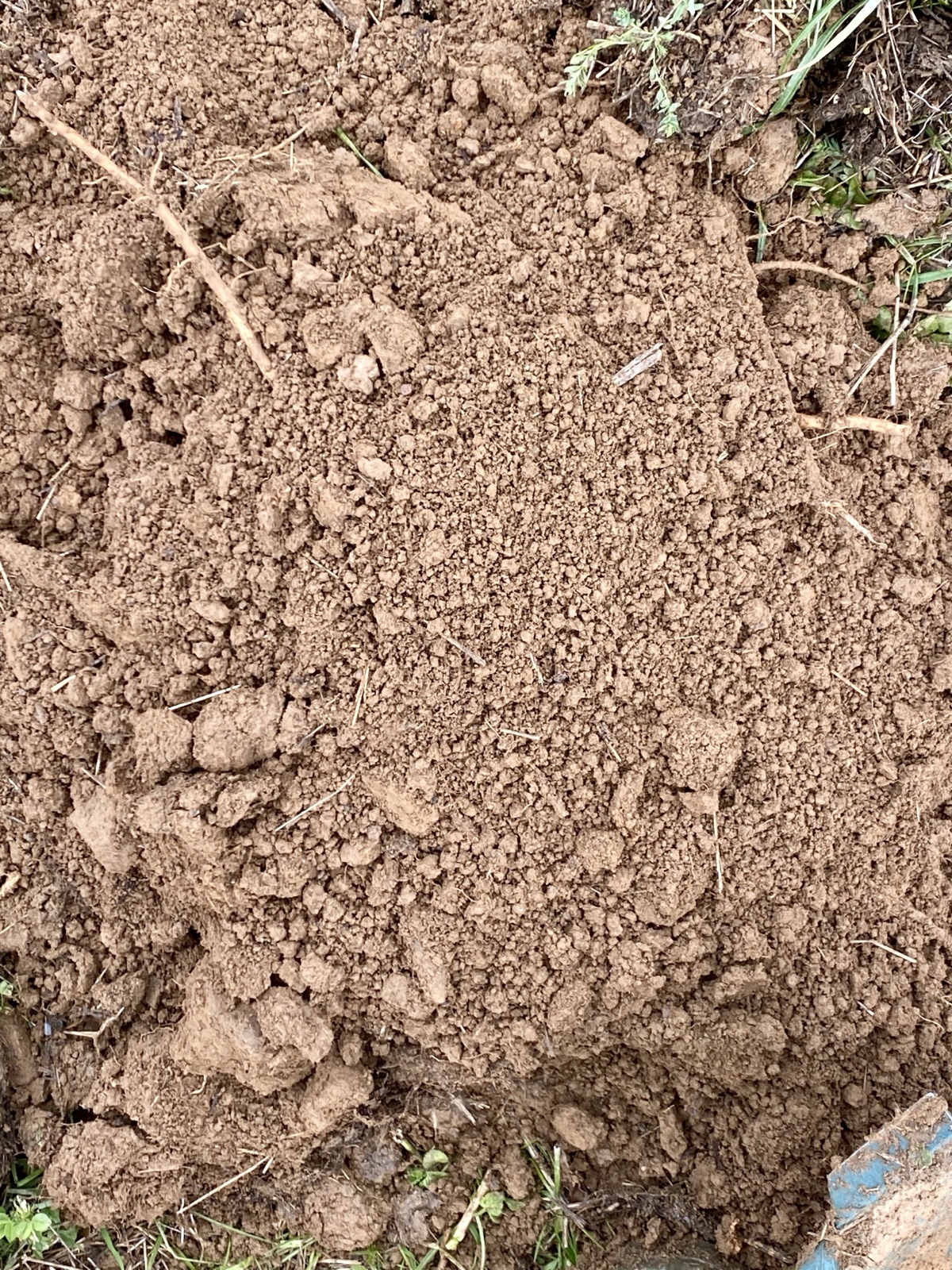
Three drawings of one field, after SOBAC’s own soil cycle diagram. Plant, manure, rain and rock are the same in all three; only the size of each flow changes, and the markers show what has grown or shrunk against the soil left to itself. Beside the second and third drawings is the same thing seen in the ground: the two faces of one Warwickshire field, untreated and in its third season on the biology.
What it does to the plant. The plant works for its nutrients: sugars down to the rhizospheric organisms round its roots, water and nutrient back up, and roots as deep as the structure lets it.
What it does to the plant. Fed direct, the plant goes lazy: it trades less with its root organisms and stops rooting down, into ground that stays compact. Little humus is built, the rock is barely drawn on, and the soil is no further on next year.
Soluble nutrients arrive at the roots ready made, so the plant has no need to trade. Little sugar goes down to the rhizospheric organisms; the roots stay in the top 35 cm, with compaction below. Next year’s humus is barely built, and what the crop does not take is leached. The plant is fed, the soil is not, and the full rate is bought again.
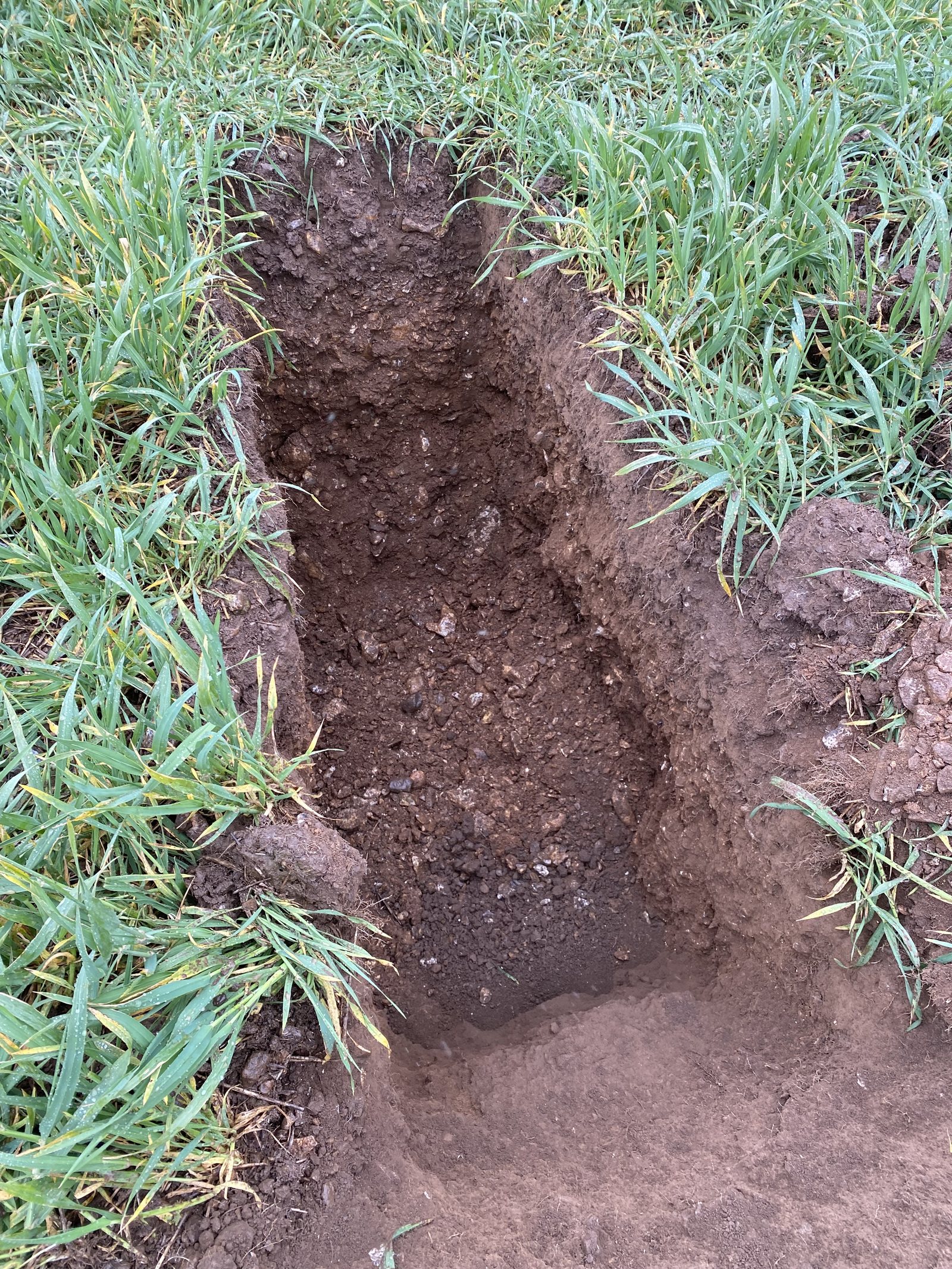
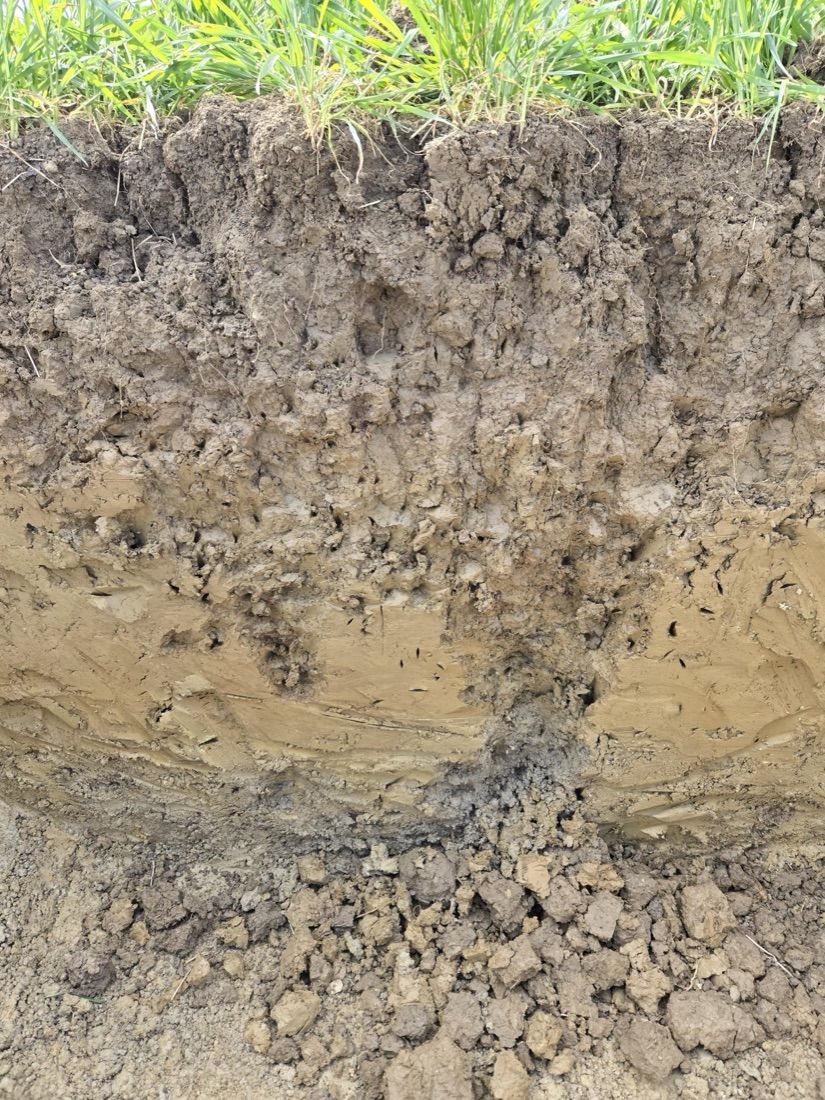 12 cm brown topsoil ends35 cm last functional roots50 cm ultra compact, no air100 cm grey clay, saturated
Seen in the pit. Warwickshire clay, untreated: the roots stop at 35 cm, compacted clay below.
What it does to the plant. Fed by the soil, the plant keeps trading and keeps rooting, through open, crumbly soil to 95 cm in the pits. Humus builds, the rock is drawn on, and each season starts further ahead, so the bought fertiliser can step down year by year.
Fed by the soil, the plant keeps working: sugars go down to the rhizospheric organisms, water and nutrient come back up, and the roots go looking, through soil that opens and turns crumbly, to 95 cm in the pits. The humic organisms build humus from manure and residue, so the soil starts each year richer than the last and the bought fertiliser can step down.
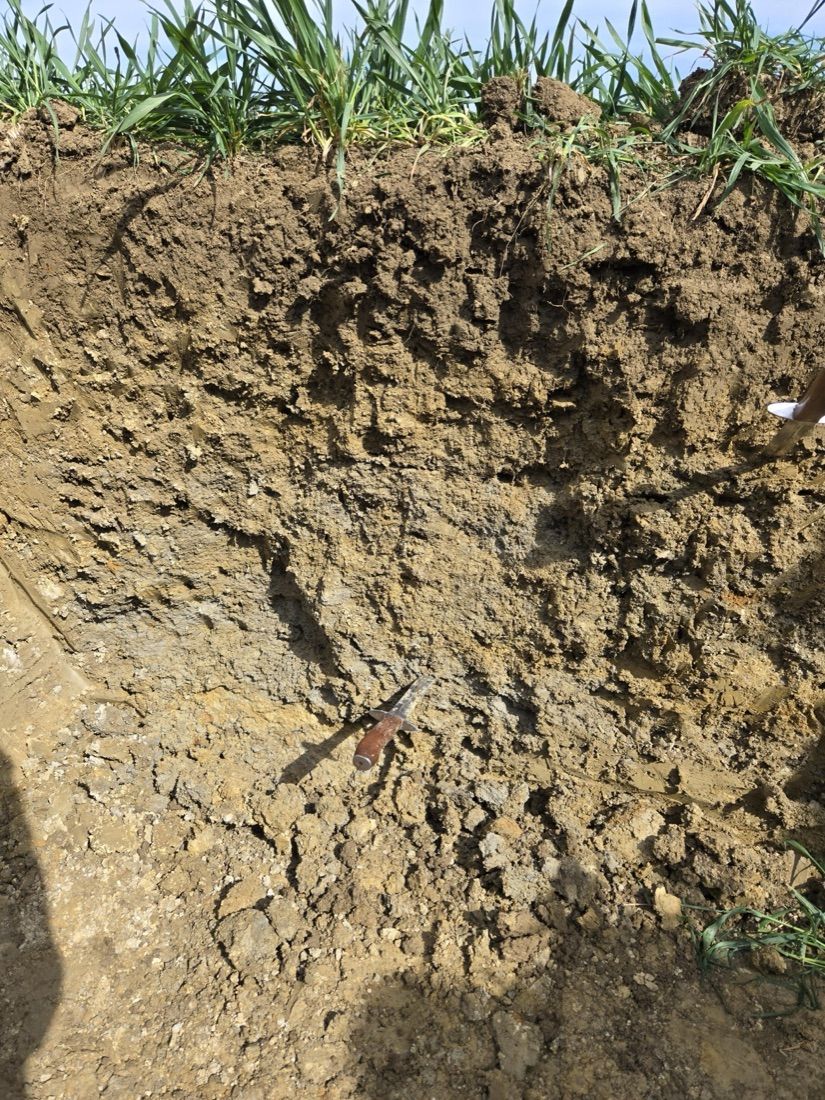 15 cm lumpy, aerated topsoil45 cm horizons mixed, no compaction95 cm rooted throughout, earthworms
Seen in the pit. The same field in its third season on the biology: rooted and open to 95 cm.
Where the manure goes on and rain soaks in or runs off. Home of the autotrophic organisms, which feed on the air.
The living layer: most of the roots, organic matter and biology, where the humic organisms build humus. 15 cm deep in the untreated Dorset trench, 45 cm on the biology.
Water and nutrient the crop reaches only if its roots get in. Compacted, it shuts the crop out; on the biology it is open and crumbly, and the treated pits root to 95 cm.
The mineral bank: phosphate, potash, calcium, magnesium, trace elements. The biology draws on it; fertiliser alone barely touches it.
The root zone: the millimetres round each root where the rhizospheric organisms live, trading what the plant makes for what the soil holds.
After SOBAC’s soil cycle diagram. The roots and the topsoil are as read in the pits above; the rain and the winter nitrogen from SOBAC’s own trial record.
Heavy rain and a long dry spell both leave the soil shut. A flood fills every pore and the air goes out of it; the organisms that build the soil need oxygen, and a field that sits waterlogged for weeks goes sour, grey and smelly. A drought bakes a cap on the surface and cracks the ground, and when the rain does come it runs off the cap instead of going in.
What getting air in does, and what the biology adds, as we advise it.
Whatever gets air in: a spiked roller, a slitter, a spiked or shattering aerator, or a subsoiler where there is a pan. The job is the same. Air gets back into the soil, water finds a way down after it, and the roots and the biology get going.
On its own the effect is short, because an opened soil with nothing to hold it closes up again. With the biology in the ground the air stays in: the humic organisms bind humus on to the clay in the holes and gaps the pass has made, the crumb forms, roots and worms take over the job, and the pass is needed less often.
A plant makes sugar in its leaves from sunlight and sends a good share of it down through its roots, where the organisms round the roots turn it into humus. What is left above ground after grazing decides whether that keeps happening.
The same plant three ways. Grazed to 5 cm, the leaf that is left keeps making sugar, the plant pushes a pulse of it down to the roots and the fungi, and the new leaf grows from the stubble. Grazed bare, the plant has no leaf to make sugar with, so it pulls its reserves up out of the roots to regrow, the roots shrink and the organisms round them go hungry.
Done right, on the system: the stock have taken the top off and moved on, 5 cm of leaf is left making sugar, their dung lies on the surface, and each of SOBAC’s three groups of organisms is fed. The autotrophic at the surface start the dung and the litter breaking down into humus. The rhizospheric, in a sleeve up to 2 cm wide round every root, take the sugar the leaf sends down and hand back water, phosphate, potash and trace elements. The humic, everywhere in the soil, turn what comes down into stable humus bound to the clay. Worms throughout, most of them at 5 to 20 cm.
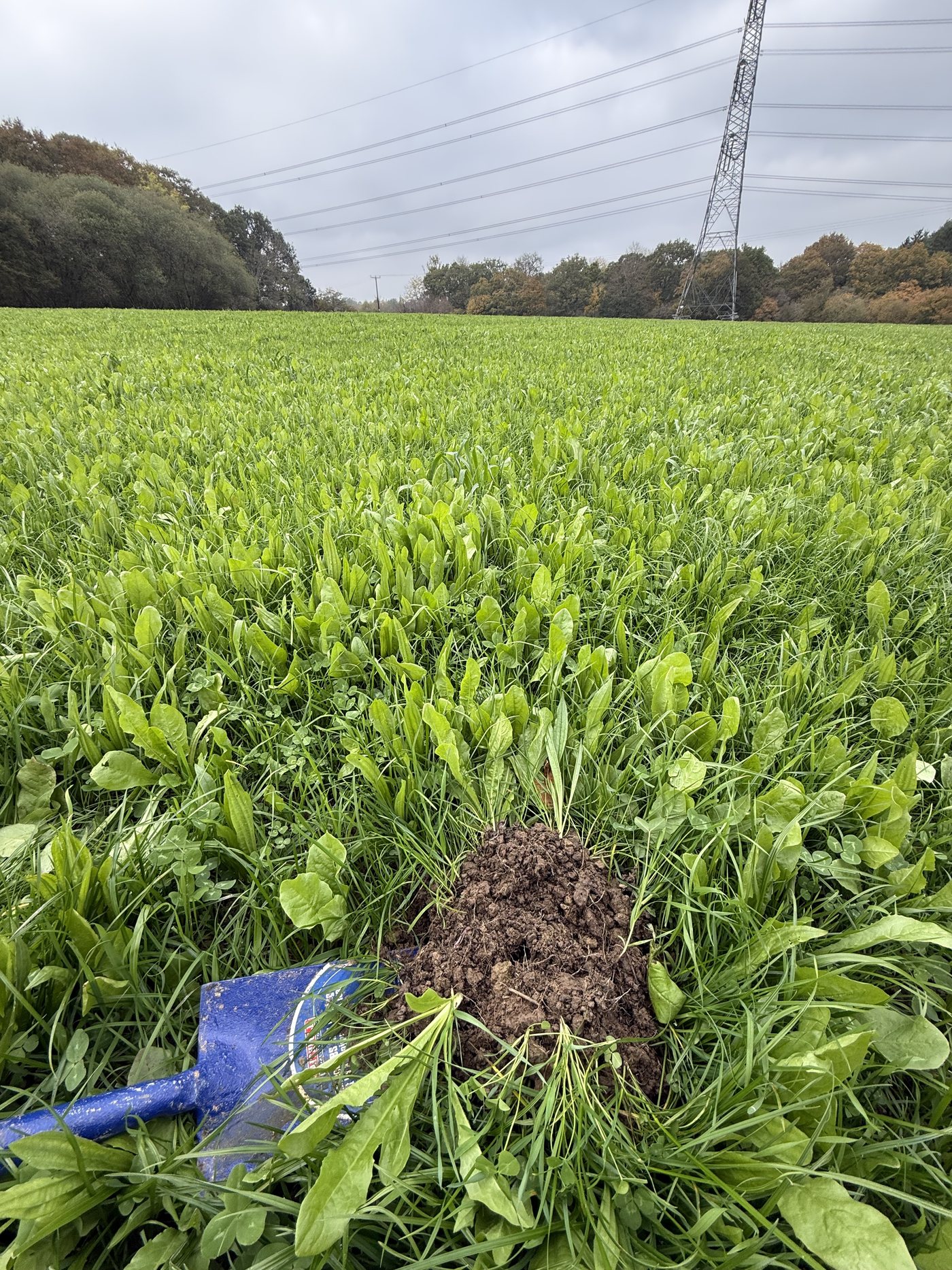
That trade at the roots is what the biology lives on, and the 5 cm is what keeps it running. The leaf feeds the organisms round the roots, the dung and the litter feed the organisms at the surface, and both feed the humus builders through the whole soil.
It matters more than the litter on top: carbon that enters the soil as sugar from living roots is turned into humus several times more efficiently than carbon from dead leaves and residues on the surface. So the ley grazed to 5 cm and rested keeps the sugar flowing to the soil through the grazing season and into the winter, and comes to the spring with its roots whole and its soil fed.
AHDB, The impact of overgrazing on forage production, and Managing herbal leys as another crop; Farming Connect; Cotswold Seeds, Grazing management of herbal leys over winter; Sokol, Kuebbing, Karlsen-Ayala and Bradford (2019), New Phytologist 221, on living root carbon and humus. The three groups of organisms are SOBAC’s, as drawn on our soil cycle above.
A grass farm has the dung, the ley and the stock to feed its soil. An arable farm has to put the organic matter in on purpose: with what grows between the crops, with what the roots leave behind, with manure where there is any, and with the biology that turns all of it into humus instead of letting it burn off.
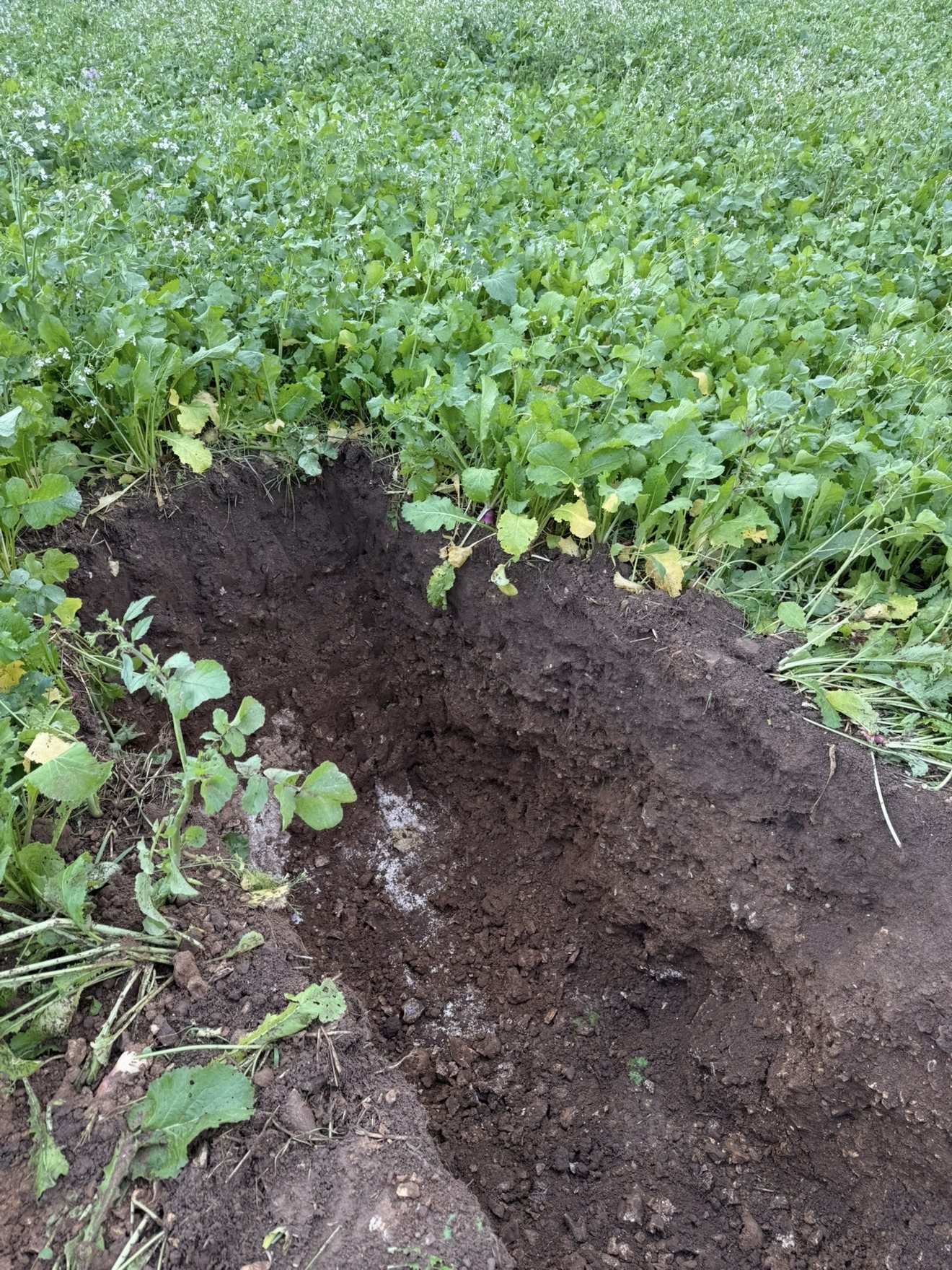
Spring and autumn of the same year, under a different crop each time. The dark is the organic matter the cover and the biology have put in.
In the comparative study on ten French farms, soils treated for three to six years held more carbon and more nitrogen than the untreated soils beside them, most of it below 30 cm, fixed from the air by the organisms and held as humus. SOBAC’s sum is that to add the same carbon with manure you would spread about 50 tonnes of cattle manure a hectare, every year. On an arable farm with no stock that is the share the biology brings on its own. Everything below adds to it.
PURPAN engineering school, comparative study on ten sites after three to six years, as summarised by SOBAC.
Sown after harvest and kept through the winter, grazed or destroyed before the spring crop: leaf above and roots below from September to March, where the ground would otherwise be bare.
The leaf keeps the soil covered and the roots keep the sugar flowing to the organisms. With the biology in the ground, what the cover leaves behind is built into humus rather than burning off by June.
A quick cover, mustard, rye or phacelia, sown straight behind the combine to catch the nitrogen left in the soil before the winter rain takes it.
The nitrogen is held in the leaf and the root, and the biology holds it in the humus as the catch crop breaks down. The next crop gets it back and the drain water does not.
Sheep on the cover crop or the ley through the winter, lightly, 5 cm left, off when it poaches.
Leaf becomes dung on the surface and a pulse of root sugar below, so the organisms at the surface and round the roots are fed at the same time. A grazed cover does more for the soil than a mown one.
A two year ley in the arable rotation, a deep rooted cover, a legume, a cereal: each root goes to a different depth and feeds a different part of the soil.
Carbon that goes in as sugar from living roots is turned into humus several times more efficiently than residue left on top. Varied roots, varied depths, more of the profile fed.
Spread where there is any, usually on the nearest fields.
With Bacteriolit in it the manure arrives composted and holds its nitrogen, and every tonne carries the biology onto the field it goes to.
The aerator, the slitter, or the subsoiler where there is a pan, once the ground has dried.
Opens the way for roots and water. The biology keeps it open, binding humus to the clay in the gaps the pass has made.
Direct drill or min till where the ground allows, and leave the structure alone.
The structure the biology builds is left in place, so each season starts further on than the last.
Every one of these puts organic matter in. The biology is what turns it into humus bound to the clay, and what adds its own share from the air. Without it, a cover crop is a flush of organic matter that burns off by summer. With it, the carbon stays. Grazing the covers: see leave 5 cm of green; air after the wet: see getting air back in.
Fertiliser does not feed the crop. The soil does. The bag feeds the soil, and a soil with no carbon in it cannot hold what it is given.
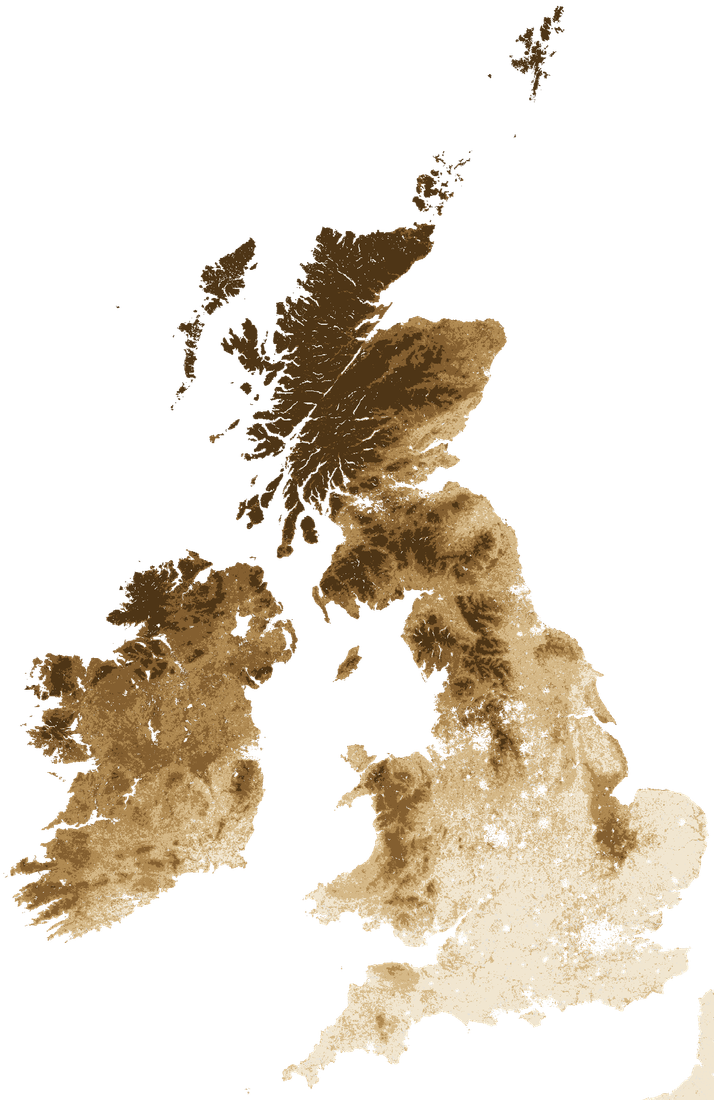
Topsoil organic carbon, 0 to 30 cm, Britain and Ireland, from ISRIC SoilGrids 2.0 (CC BY 4.0), the global soil model built from soil samples with satellite and terrain data: Poggio and others, SOIL 7, 2021. Map rendered by AgrAssure.
Humus is carbon. It is the dark, stable organic matter the biology builds, bound to the clay, and it is the soil’s pantry. It carries the charge that holds the potash, the calcium, the magnesium and the ammonium the crop needs, so they stay in reach of the root instead of washing through. It holds water, many times its own weight. And it feeds the organisms that turn locked phosphate and potash into forms the plant can take.
On a carbon poor soil the same bag goes three ways: into the drain as nitrate, into lock up on the calcium and the iron as phosphate, and into the air as ammonia. The farm pays for all three. On a soil with its carbon back, more of every kilo stays where it was put, which is why the bought rate can step down without the yield going with it.
Which is why the map matters. The pale ground is where the carbon is thinnest, and it is the arable east and south: the ground that gets the most fertiliser. Put the carbon back and the fertiliser starts to work again.
of their organic carbon already lost by most arable soils, as the Environment Agency puts it in its 2019 report on the state of England’s soils.
the rate at which the soils of England and Wales lost carbon between 1978 and 2003 when the National Soil Inventory was resampled. The Countryside Survey, resampling Great Britain to 2007, saw the losses of carbon and nitrogen on arable land.
of topsoil lost to erosion in England and Wales every year, and soil degradation costed at £1.2 billion a year, in the same Environment Agency report.
wheat and maize yields still rise with every bit more soil carbon, levelling off at about 2%, and two thirds of the world’s wheat and maize land sits below it. The same global study puts the potential saving at 5% of nitrogen inputs across wheat and 7% across maize.
Across the EU and the UK together, the farmed topsoil lost 0.75% of its carbon between 2009 and 2018 on the resampled survey points, with the biggest losses in the central and northern countries. The decline is measured on the ground, by resampling the same points years apart.
Environment Agency, The state of the environment: soil, June 2019. Bellamy, Loveland, Bradley, Lark and Kirk, Carbon losses from all soils across England and Wales 1978 to 2003, Nature 437, 2005. Reynolds and others, Countryside Survey: national soil change 1978 to 2007 for topsoils in Great Britain, Vadose Zone Journal 12, 2013. Oldfield, Bradford and Wood, Global meta-analysis of the relationship between soil organic matter and crop yields, SOIL 5, 2019. De Rosa and others, Soil organic carbon stocks in European croplands and grasslands, Global Change Biology 30, 2024.
Cover crops, leys, manure, grazing, lighter cultivations and the aerator all put organic matter in and open the soil up. The biology is what turns that work into humus, and humus is what changes the soil. Nothing you do is replaced. It is all made to work harder.
You subsoil or aerate, put in cover crops and leys, and keep the ground covered.
Builds the humus that keeps the structure you open from closing again. Humus bound to clay holds water and lets air and roots through, and the treated profiles rooted to 95 cm.
You step the bagged fertiliser down and watch the yield.
Unlocks the phosphate and potash already in the ground and holds the nitrogen over winter, so the step down holds the yield. Potash went from index 1 to 3 with none bought.
You spread farmyard manure, slurry or digestate.
Bacteriolit composts it into stable humus rather than a flush that leaches: more nutrient per tonne, no crusting, less smell, and more of what you spread still in the soil next year.
You graze in rotation, keep 5 cm of green and rest the leys.
Feeds the organisms at the surface and round the roots on dung and root. One treated ley carried double the usual stock for over a month; the sward comes back faster after grazing.
You direct drill or min till, and leave the structure alone.
Does the cultivation for you: roots and worms open the soil from below, and the structure the biology builds is left in place, so each season starts further on than the last.
You test the fields and watch the indices.
Shows up in your own tests: organic matter up, potash and phosphorus indices up, pH settling, with nothing bought to do it.
Through your own spreader, once a year, whole bags spread in full. For the fields the manure does not reach: arable ground, grazing and cutting leys.
BacteriosolOnto the heap, the slurry store or the bedding through the winter, and it covers every field the manure goes on. The winter job on a livestock farm.
BacteriolitThe same biology in a form you spray, for arable farmers who already cover their fields with the sprayer and want it on in the spray window.
Quaterna SolOne product per field per season, never Bacteriosol and Bacteriolit on the same ground in the same year. A livestock farm usually runs both, the manure on some fields and the spreader on the rest.
Increased crop yields and profitability as the soil does more of the heavy lifting.
Improved soil fertility and water retention, so crops cope better in a dry spell.
Less bought fertiliser year after year, as the soil unlocks its own reserve.
Enhanced biodiversity above and below ground, from worms to wildlife.
More humus holds more water, so the land copes better with a wet winter and a dry summer.
You build an appreciating asset, not a field that needs more every season.
As the biology re-establishes, phosphate and potash come from the soil’s own reserve, the pH settles, and bought nitrogen is stepped down year by year against your own rate and your own soil tests. That is a structural change to your cost base, not a one-off saving.
Two trenches in the same field on a Dorset arable farm, April 2025: one untreated, one treated for three seasons. Opened and described with the farmer present; the layer lines are the report’s own horizon marks.
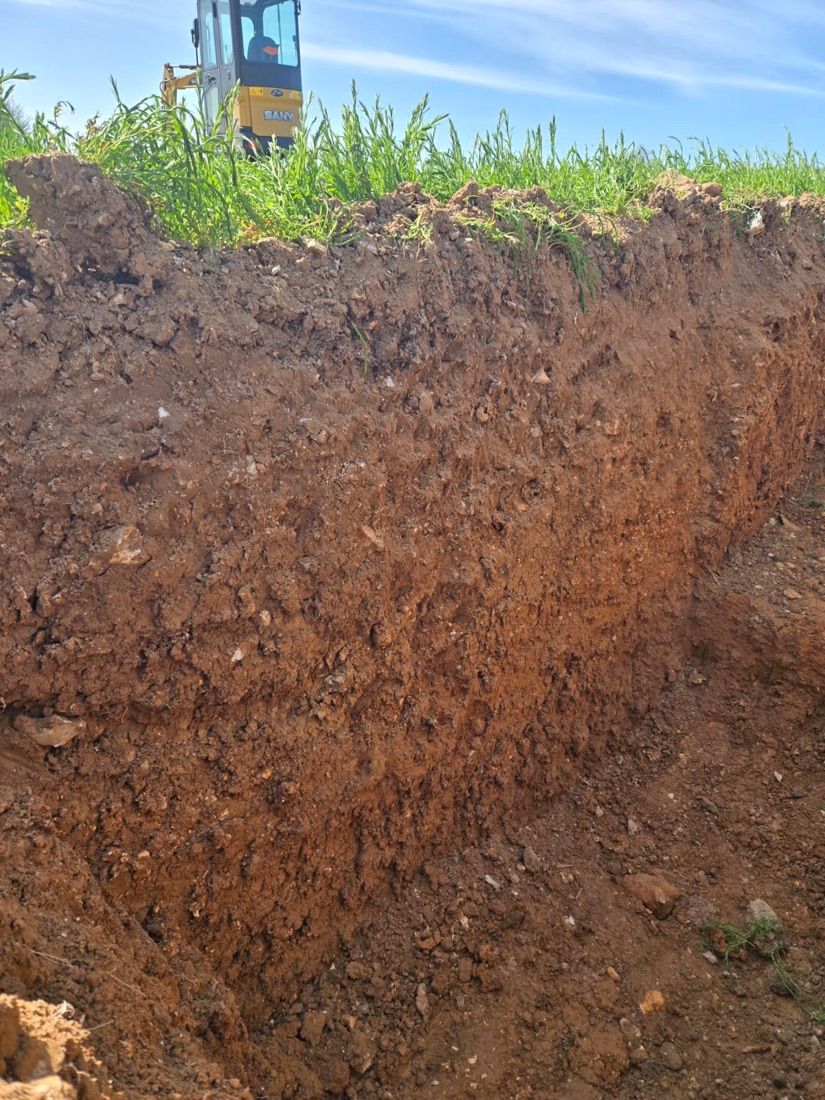 15 cm dry topsoil ends50 cm last roots, compaction begins70 cm ultra compact, no roots
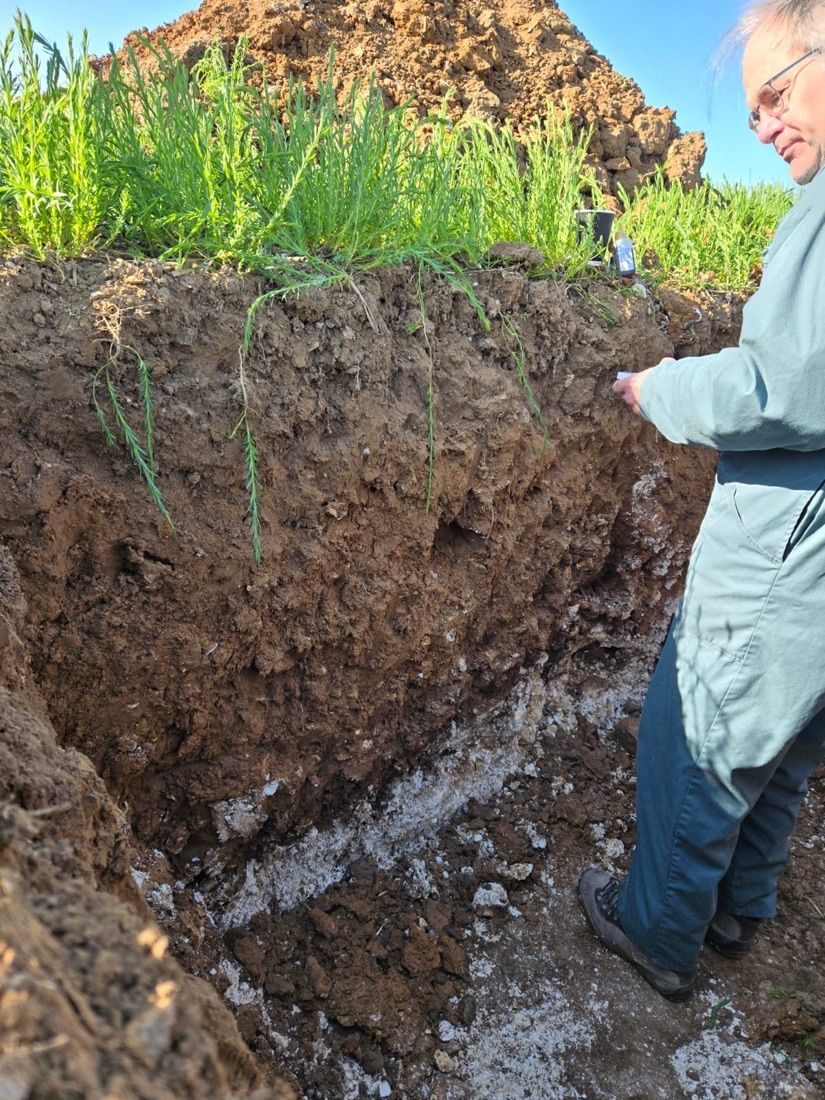 30 cm aerated topsoil ends75 cm dense roots, not compact95 cm dark, earthworms, roots to here
Soil profile report on trenches opened 28 April 2025, read at the pit face. The Warwickshire pits are on the home page.
The layer lines are the horizons marked on SOBAC’s soil profile reports of April 2025, drawn on the same photographs with the reports’ own notes.
Positive changes begin, improving structure and the first signs of returning biological activity.
Deeper root systems and healthier crops as nutrient cycling and humus formation build momentum.
Bought inputs stepped well down as the soil sustains more of its own fertility, and the change showing in your own soil tests.
SOBAC's approach is built on over 30 years of research and has already been applied across more than 300,000 hectares of farmland. AgrAssure brings that proven science to UK farms.
Every farm starts from a different place. Tell us about yours and we'll map out a realistic path, and the products to get there.
Start the conversation